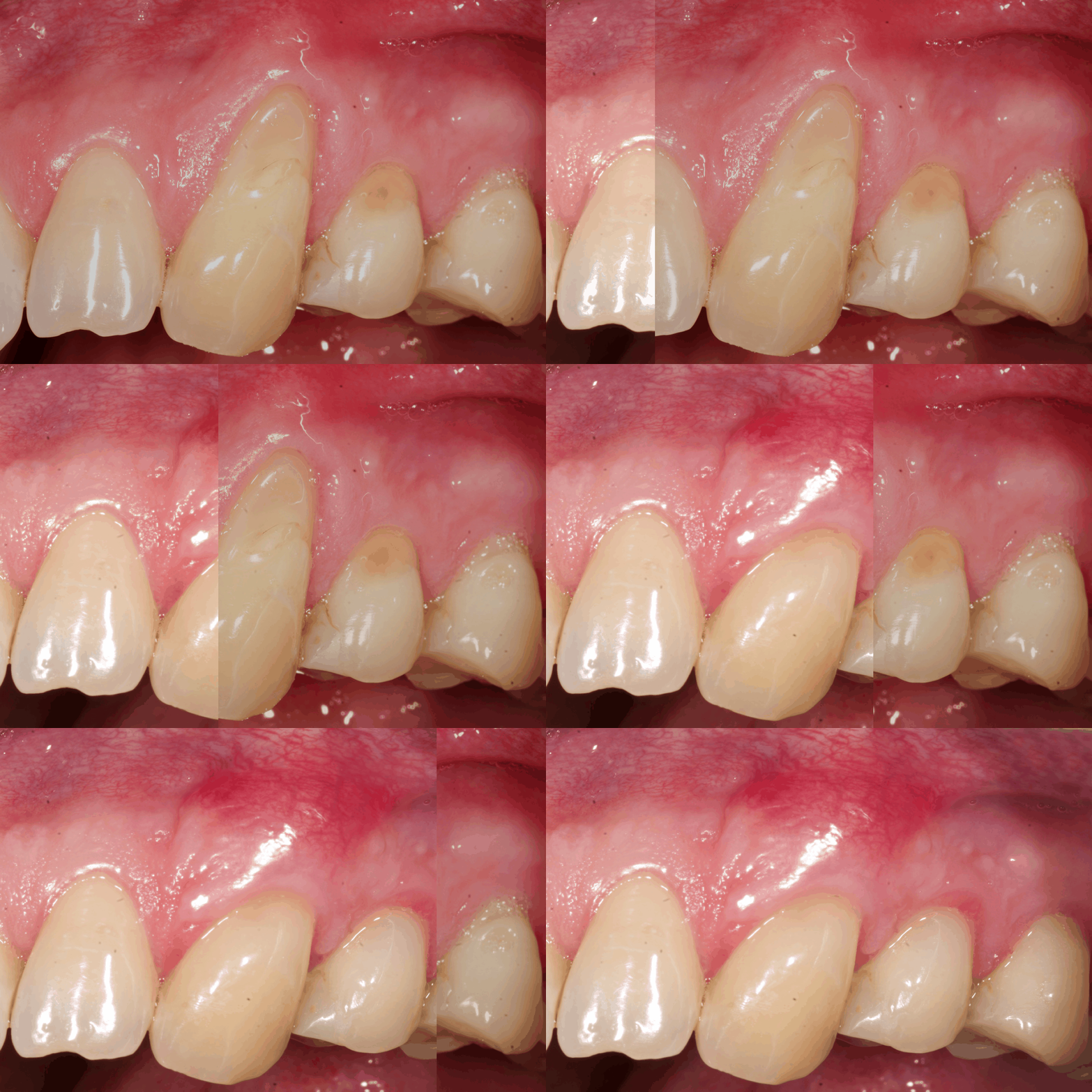
Gum grafting: does it work?
An overview on the outcomes of gum grafting procedures
1/31/20262 min read
Gum recession is very common. Many people notice that their gums “move up,” leaving part of the tooth root exposed. This can cause sensitivity, aesthetic concerns, and sometimes fear of losing the tooth.
A common question patients ask is:
“Does gum grafting actually work?”
The answer is yes — in many cases it works very well, but it’s important to understand when and why.
What Is Gum Grafting?
Gum grafting is a procedure designed to cover exposed tooth roots and strengthen the gums.
In simple terms, we gently move the gum back into its correct position and, when needed, add a small amount of tissue to make it thicker and stronger.
The goal is not only to improve appearance, but also to protect the tooth and make the gums more stable over time.
How Successful Is Gum Grafting?
When gum grafting is performed in the right conditions, results are usually very good.
Clinical studies show that:
On average, 70–90% of the exposed root can be covered
In ideal situations, complete root coverage is achieved in about 8–9 cases out of 10
This means that for many patients, the root can be fully covered again, with a natural and healthy appearance.
When Does It Work Best?
Gum grafting is most predictable when:
The bone around the tooth is healthy
The recession is treated early
The patient maintains good oral hygiene
Smoking is limited or avoided
In these situations, results are highly reliable and long-lasting.
Are There Any Limits?
Yes — and being honest about this is important.
Gum grafting may be less predictable when:
Gum recession is very advanced
Bone support around the tooth has already been lost
Oral hygiene is poor
The patient smokes heavily
In these cases, the treatment can still be beneficial, but the goal may be to reduce sensitivity, protect the tooth, and stop the recession from getting worse, rather than achieving perfect coverage.
Benefits Beyond Aesthetics
Even when full coverage is not possible, gum grafting can:
Reduce tooth sensitivity
Make gums thicker and stronger
Lower the risk of future recession
Improve comfort when brushing
So the treatment is often worthwhile even beyond cosmetic reasons.
The Bottom Line
Gum grafting works — and in the right conditions, it works very well.
While there are biological limits, modern techniques allow us to achieve natural, stable, and long-lasting results for many patients. A proper assessment is essential to decide whether the procedure is right for you and what outcome you can realistically expect.
If you’re concerned about gum recession, an early consultation can make a big difference.